
Why Your Garage Door Won't Open When It's Cold: A Nebraska and Iowa Winter Troubleshooting Guide
Cold changes three things about a garage door, and this guide walks the five symptoms that follow, which ones you can fix standing in the driveway, and the one that means stop touching it.
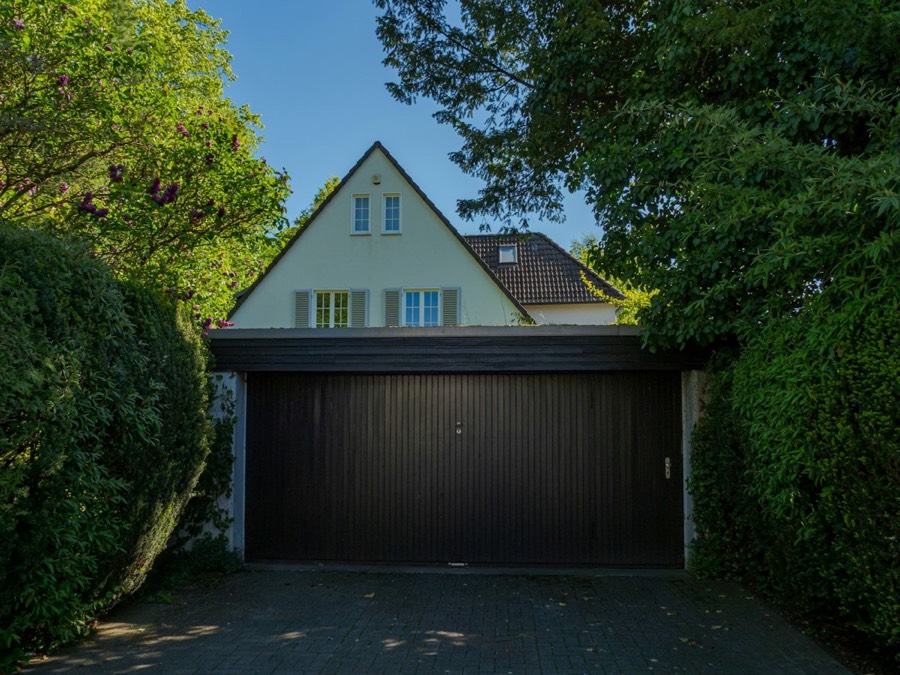
If your garage door won't open in cold weather, If your garage door won't open in cold weather, cold is acting on the door in one of three ways, and several of the symptoms below you can check in the next five minutes.. Cold changes three conditions, and every symptom below comes from one of them.
One: lubricant thickens. Grease in the rollers, hinges and opener rail stiffens as the temperature drops, and old grease carrying a season of dust turns closer to tar.
Two: everything the door rides on gets stiffer and less forgiving. Stiff grease, a dry roller and a track that was already slightly out of line add up in the cold to a door that binds where it used to glide.
Three: the bottom seal bonds itself to the slab. Meltwater off your tires runs to the low point of the apron, sits under the astragal and freezes. By morning the door is glued down.
Symptom 1: The garage door is frozen to the ground
The opener pulls, the bottom section flexes upward while the bottom edge stays put, and the motor quits or reverses. Look at the bottom edge, not the opener: if the seal stretches away from the panel while the edge against the concrete stays welded down, you have a garage door frozen to the ground, not a mechanical failure.
- Stop pressing the button. Every attempt pulls the cables, the top section and the opener gear against a door that will not move.
- With the door fully down, pull the emergency release rope so the door moves by hand.
- Work the ice loose from outside with a plastic putty knife slid flat along the concrete under the seal. Tapping the seal with a rubber mallet often cracks the bond.
- Lift slowly, watching the seal release across the full width. Then sweep and dry the concrete where it lands, or it refreezes tonight.
What not to do. Hot water buys ninety seconds, then runs under the seal and refreezes thicker than before. A heat gun held close enough to melt ice fast will deform the vinyl astragal, and a split seal takes on water instead of shedding it. Prying with a shovel tears the seal out of its retainer and can bend the bottom section.
Symptom 2: The opener runs but the door does not move
The chain travels and nothing happens, or the door lifts a few inches and stops. If the seal is free, look at what the door rides on.
Hardened grease. Roller stems, hinges and bearings lubricated with the wrong product, or not at all in years, stiffen in single-digit weather. A roller that will not spin skids along the track, and the opener feels that as resistance.
Debris frozen in the track. Slush off the tires, gravel off a rural driveway, grit and salt collect in the bottom of the vertical track and freeze into a lump. The first roller hits it and the door stops dead. Check both tracks to waist height with a flashlight.
The force setting doing its job. Every modern opener has a force limit. When the door needs more push or pull than the setting allows, the opener stops and reverses. That is not a malfunction. That is the safety system reporting that something is harder to move than it should be.
Which is why turning the force adjustment up to make it work is the wrong fix. All it does is let the opener pull harder before it decides something is wrong, so the next time something is under that door, it pushes harder before reversing, and the real cause stays buried. Move the door by hand instead, opener disconnected: heavy or gritty means the fix is in the door.
Symptom 3: The garage door won't close in winter and reverses on the way down
The door starts down, gets partway, then runs back up, often with the opener light blinking a count. When a garage door reverses when closing in cold weather, the photo-eye safety sensors are the first suspect, and winter gives them three reasons to fault.
Frost and condensation on the lenses
Park a warm, wet car in a cold garage and moisture condenses on every cold surface, including two small lenses six inches off the floor. Then it freezes. A frosted lens looks fine at a glance and is opaque to the beam. Wipe both with a dry cloth.
Low winter sun into the receiver
The sun sits much lower here from November through February, and late in the day it can shine straight down a driveway into the receiving sensor and wash out the beam. If the door only misbehaves at one time of day, that is your answer, and shading the sensor fixes it.
A bracket knocked out of alignment
Snow shovels, snowblower handles and bumpers all live at sensor height, and a bracket only has to move a fraction of an inch to lose the beam. Both sensors have indicator LEDs: typically the sender's stays lit, and the receiver's holds steady when it sees the beam and goes dark or flickers when it does not. Loosen the wing nut on the receiving bracket and move it by hand in small increments until that light is solid and stays solid when you let go.
If the sensors are clean, aimed and lit and the door still reverses at the same point, it is hitting resistance there. That is mechanical, not electronic.
Symptom 4: The door feels heavier, sounds different, or drops at the end
This one deserves the most respect. Your door is counterbalanced by springs, not lifted by the opener. Torsion springs on the shaft above the opening are wound under tension, and that stored energy is what raises the door's weight. When the balance changes, so does the character of the door: heavier by hand, a new bang on the way up, a last foot that drops.
The manual balance test:
- Close the door completely. Never pull the release rope with the door open: if a spring is weak or broken, the door can come down hard.
- With the door down, pull the release rope.
- Lift the door by hand to waist height and let go, hands and feet clear.
- A balanced door stays roughly where you left it. One that sinks or slams has lost spring tension. One that shoots upward has too much.
Cold rarely breaks a spring by itself, but a spring near the end of its life is being asked to move a colder, stiffer door, and that is when it lets go. If you heard one loud bang and the door will not lift, look at the spring above the opening: a gap in the coil means it is broken.
This is where you stop. Do not repeat the test on a door that fails it, do not force it with the opener, and do not touch the springs. Guardian Services handles springs, cables, rollers, tracks and panels as routine work.
Symptom 5: The remote or keypad quits in the cold
The door is fine. The signal is not. Battery output falls at low temperatures: internal resistance rises, current drops, and a battery that reads fine indoors cannot fire the transmitter outdoors. An exterior keypad, bolted to the trim and exposed to wind and blowing snow, is almost always first to go.
- Wall button first. It is hardwired. If the door runs from it, the opener and the door are fine and you have a transmitter problem.
- Fresh battery. Use new cells from a warm place, not the spare pack from the glovebox, and check the contacts.
- Warm the remote. If a cold remote works after five minutes in your pocket, that is your diagnosis.
- Then the opener. Only if the wall button also does nothing is the opener itself a suspect.
Before the first hard freeze
A little fall maintenance heads off most of what goes wrong with a garage door in a Nebraska or Iowa winter.
- Lubricate the right parts: hinges, roller stems and bearings, the spring coils, the end bearing plates. Use a lubricant made for garage doors. A penetrating spray is a solvent, not a lubricant, and strips out what is there.
- Keep the track dry. The track is a guide, not a bearing surface. Grease in it collects grit and makes rollers skid instead of roll.
- Clear and dry the landing strip where the seal comes down. If water pools there, it will freeze there.
- Inspect the bottom seal for splits, cracks and hard spots. A torn seal holds water instead of shedding it. Replace it before freeze-up, not in February.
- Snug the hardware. A season of cycles loosens hinge screws, track bolts and lag screws in the jamb. Leave the bottom bracket bolts alone.
What not to attempt, in any weather
Springs, cables and bottom brackets. Torsion springs hold enough stored energy to cause serious injury, and they release it instantly if a winding bar slips. The cables carry that same tension whenever the door is down, and the bottom brackets are loaded even when everything looks still. Not homeowner repairs.
Which of these means call today
Symptoms 1, 3 and 5 are often yours to solve standing right there in the garage, and symptom 2 is worth one look at the track first. Symptom 4 is a call, and it is the one worth making at the next opportunity rather than living with. So is a door off a roller or out of the track, a bent panel or hinge, a bang that cost you your lifting help, or an opener straining against a door that will not move. Repeated attempts are how a frozen seal becomes a bent top section and a stripped opener gear.
For garage door repair in Omaha, Guardian Services covers the metro plus rural Nebraska, western Iowa and northwest Missouri: Bellevue, Papillion, La Vista, Elkhorn, Gretna, Blair, Fremont, Wahoo, Ashland and Lincoln, and across the river through Council Bluffs, Glenwood and Missouri Valley. Residential and commercial, with a parts and labor warranty, plus the service door lock beside it.
Still stuck in the cold? Call Guardian Services at 531-272-2728. We answer 8am to 8pm, Sunday through Friday, with same-day service available across Omaha, Lincoln, Council Bluffs and the surrounding towns. Or send us the details and we will reply during those hours.